[Previously in Part 1: We explored how American law creates a hierarchy of discrimination, treating racial classifications most strictly, sex-based classifications with intermediate scrutiny, and how Section 1981, an 1866 law, became the legal basis for challenging Kamehameha Schools.]
The Kamehameha Schools Story
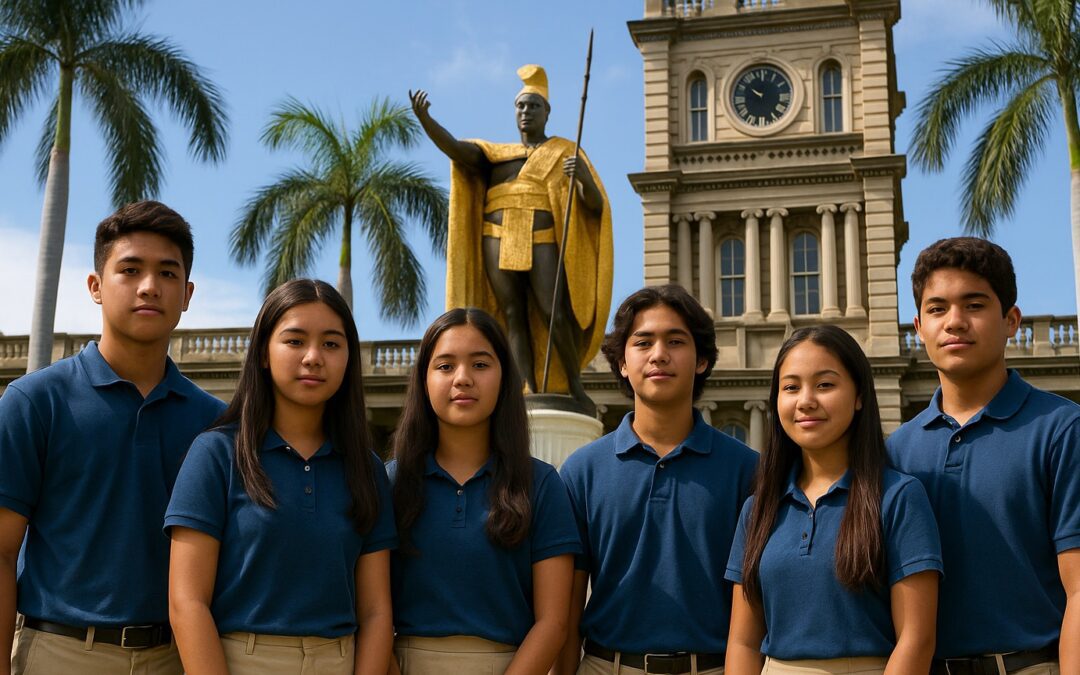
Kamehameha Schools is a private school system in Hawaii founded in 1887 by Princess Bernice Pauahi Bishop, the last descendant of King Kamehameha I. In her will, written in 1883, she left her vast estate to create schools dedicated to educating Native Hawaiian children. For decades, the schools have given strong preference to Native Hawaiian students in admissions, essentially excluding non-Native Hawaiians unless there are empty seats.
The schools operate three campuses serving approximately 6,900 students from preschool through 12th grade, making it one of the largest private school systems in the United States. The estate that funds the schools is worth billions of dollars, including significant landholdings across Hawaii.
The Strange Timeline Problem
Here’s where things get really weird. Remember how we talked about Section 1981 being from 1866/1870? Let’s look at the timeline:
- 1883: Princess Pauahi writes her will in the Kingdom of Hawaii (an independent nation, NOT part of the United States)
- 1887: Kamehameha Schools founded
- 1898: Hawaii annexed by the United States (US laws, including Section 1981, now apply)
- 1959: Hawaii becomes a state
- 1866-1976: Section 1981 exists but nobody thinks it applies to private school admissions
- 1976: Runyon v. McCrary ruling means Section 1981 suddenly applies to private schools
- 2003: First lawsuit against Kamehameha (116 years after the school was founded)
- 2006: Ninth Circuit rules 8-7 that the policy is legal
- 2007: Second lawsuit dismissed on procedural grounds
- 2025: New lawsuit by Students for Fair Admissions
So Princess Pauahi wrote her will in 1883 in an independent kingdom, and it wasn’t challenged under Section 1981 until 2003, even though the law technically applied to Hawaii starting in 1898. For most of that time (1898-1976), nobody even thought Section 1981 could apply to private school admissions.
The Reliance Argument
Kamehameha’s defenders point to this timeline as evidence of unfairness. The school operated for over a century, thousands of Native Hawaiian families planned their children’s education around it, and an entire community built institutions and expectations based on its existence. Now, they argue, applying a reinterpreted 19th-century law to invalidate a 19th-century institution seems unjust.
One dissenting judge in the 2006 case wrote: “Because education is the greatest inheritance of all, I have difficulty understanding what business it is of the federal government to tell a Native Hawaiian that she can’t choose to help other Native Hawaiians whom she believes particularly need it.”
Critics of this argument respond that longevity doesn’t create a right to discriminate. They point out that courts applied this same principle to segregated schools and racist property covenants, even when they’d existed for decades. The legal principle is harsh but clear: you can’t gain permission to violate civil rights laws simply because you’ve been doing it for a long time. From this perspective, the question isn’t “How long has this existed?” but “Does it violate the law?”
The tension is real. This case is different from typical discrimination cases because it was created by a Native Hawaiian (not imposed by outsiders), benefits a historically oppressed group, involves a private institution (not government-mandated segregation), has a remedial purpose, and carries strong cultural significance to Native Hawaiians. Whether those differences matter legally is exactly what the courts have struggled with.
What About Affirmative Action?
The law does recognize one major exception to the prohibition on racial classifications: temporary remedial measures, often called affirmative action.
Starting in the 1970s, courts developed a framework using cases about employment discrimination under Title VII (from the 1964 Act). Even though Kamehameha’s case is brought under Section 1981 (the 1866 law), the courts borrowed the affirmative action framework from Title VII employment cases to analyze it.
Courts said private employers could use race-conscious policies if they met three requirements:
- Address a specific imbalance based on the institution’s own past discrimination
- Don’t unnecessarily harm the non-preferred group or create an absolute barrier
- Be temporary, designed to fix a problem rather than maintain a permanent preference
This framework came from employment discrimination cases like United Steelworkers v. Weber (1979), where a company reserved half of its training program slots for Black employees until they made up a fair proportion of skilled workers.
The 2003 Lawsuit
In 2003, a non-Native Hawaiian student who was denied admission sued Kamehameha Schools, arguing the admissions policy violated Section 1981. The student, who went by the pseudonym “John Doe” to protect his identity, had applied and been denied admission solely because he lacked Native Hawaiian ancestry.
The case became Doe v. Kamehameha Schools, and it would turn into one of the most controversial civil rights cases in Hawaii’s history.
The First Court Decision (2005)
A three-judge panel of the Ninth Circuit Court of Appeals initially ruled 2-1 against Kamehameha Schools. The majority said:
- Section 1981 prohibits racial discrimination in contracts
- School admissions involve contracts (tuition paid for education)
- Kamehameha’s policy created an absolute racial bar
- The policy couldn’t be justified as affirmative action under the standard employment framework
It looked like Kamehameha would have to change its admissions policy fundamentally.
The Dramatic Reversal (2006)
But then something unusual happened. The case was reheard “en banc” by a larger panel of 15 judges, and the court reversed course, ruling 8-7 that Kamehameha’s policy was legal.
The majority opinion made several controversial moves:
It loosened the affirmative action rules for schools. Instead of requiring schools to fix their own past discrimination, the court said schools could address educational disparities in the broader community. Kamehameha could point to evidence that Native Hawaiian students across Hawaii had lower test scores and graduation rates than other ethnic groups.
It looked at alternatives available to rejected students. The court said the policy didn’t create an “absolute bar” for non-Native Hawaiian students because they had other good schools available in Hawaii, including excellent public and private options.
It suggested Congress implicitly approved the policy. The court noted that Congress had passed numerous laws benefiting Native Hawaiians for education, and when Congress updated Section 1981 in 1991, it didn’t explicitly prohibit preferences for Native Hawaiians. The court reasoned that if Congress wanted to ban the policy, it would have said so.
The Dissents
Seven judges dissented. Judge Bybee’s dissent (joined by several other judges) argued:
The majority rewrote the law. The standard affirmative action test requires fixing an institution’s own discrimination, not society’s problems. By allowing schools to address community-wide disparities, the majority created an essentially permanent license for discrimination with no clear endpoint.
There IS an absolute bar. Kamehameha’s policy completely excludes non-Native Hawaiians. Saying “they can go to other schools” misses the point. The civil rights laws protect individuals, not groups. You can’t tell someone denied admission, “Don’t worry, there are other schools.”
This contradicts Supreme Court precedent. The Supreme Court in Runyon v. McCrary said excluding students from private schools based on race is a “classic violation” of Section 1981. The majority was trying to avoid this conclusion through legal gymnastics.
Judge Kleinfeld wrote a separate dissent expressing sympathy for Kamehameha’s mission but concluding he couldn’t ignore what he saw as a clear violation of federal law.
Both the majority and the dissenting judges viewed their positions as defending fundamental principles. The majority saw themselves as recognizing the unique educational needs of Native Hawaiians and the flexibility Congress had provided. The dissenters saw themselves as faithfully applying civil rights law without creating special exemptions.
The $7 Million Settlement
The losing side petitioned the Supreme Court to take the case. But before the Court could decide, something happened: the parties settled. According to reports, Kamehameha paid the family $7 million, and the student was allowed to finish his education at Kamehameha.
There were different interpretations of why the settlement happened. Some observers suggested Kamehameha settled because they feared the Supreme Court would rule against them and set a nationwide precedent that would be even worse than just losing this one case. Others pointed out that settlements are common in high-stakes litigation and don’t necessarily indicate weakness in one’s legal position. The reality is that we don’t know definitively why the parties chose to settle rather than continue to the Supreme Court.
Why Native Hawaiians Aren’t Like Native American Tribes
You might be wondering: don’t Native American tribes get special treatment under the law? Why can’t Native Hawaiians claim the same thing?
In 1974, the Supreme Court ruled in Morton v. Mancari that the Bureau of Indian Affairs could give hiring preferences to Native Americans. But the Court said this wasn’t racial discrimination at all. It was political discrimination based on membership in federally recognized sovereign tribes.
The key word is “federally recognized.” Native American tribes have a unique legal status: they’re considered “domestic dependent nations” with government-to-government relationships with the United States based on treaties and the Constitution’s Indian Commerce Clause.
Native Hawaiians have never been federally recognized as a tribe in the same way. While Congress has passed many laws benefiting Native Hawaiians, the Supreme Court said in Rice v. Cayetano (2000) that Native Hawaiian status is a racial classification, not purely a political one like tribal membership.
Moreover, even if Native Hawaiians were considered a tribe, the Mancari exception only applies to government action, not private discrimination. Courts have consistently held that private entities can’t rely on Mancari to justify racial preferences, even when they have agreements with tribes.
What Happened Next
For nearly 20 years after the 2006 decision, Kamehameha Schools continued operating under its preference policy. The legal battle seemed over.
But the legal and political landscape was changing. Conservative legal organizations were becoming more organized and better funded. The Supreme Court was becoming more skeptical of racial classifications. And a new challenge was coming.
Next in Part 3: We’ll explore the 2025 lawsuit by Students for Fair Admissions and what it means for the future of Kamehameha Schools.